Bathinda is a city of the Malwa belt, the cotton and wheat country of southern Punjab, and it has more institutions than its size might suggest. The Central University of Punjab has its campus at Ghudda on the outskirts, AIIMS Bathinda is one of the newer medical campuses in the state, and the military station and the thermal plant give the city a strong pull on families across the district. Many schools here teach in Punjabi, and English is the language of most entrance and recruitment papers.
A young aspirant’s day usually includes a bus or a shared autorickshaw to a coaching room, a few hours of reading at home, and an afternoon of practice on the questions that will decide the next exam. Punjab’s public service and police recruitment rounds are demanding, and the time pressure of those papers is where many candidates lose marks. What is often absent is a timed session that resembles the genuine paper, where each question appears simultaneously for all takers.
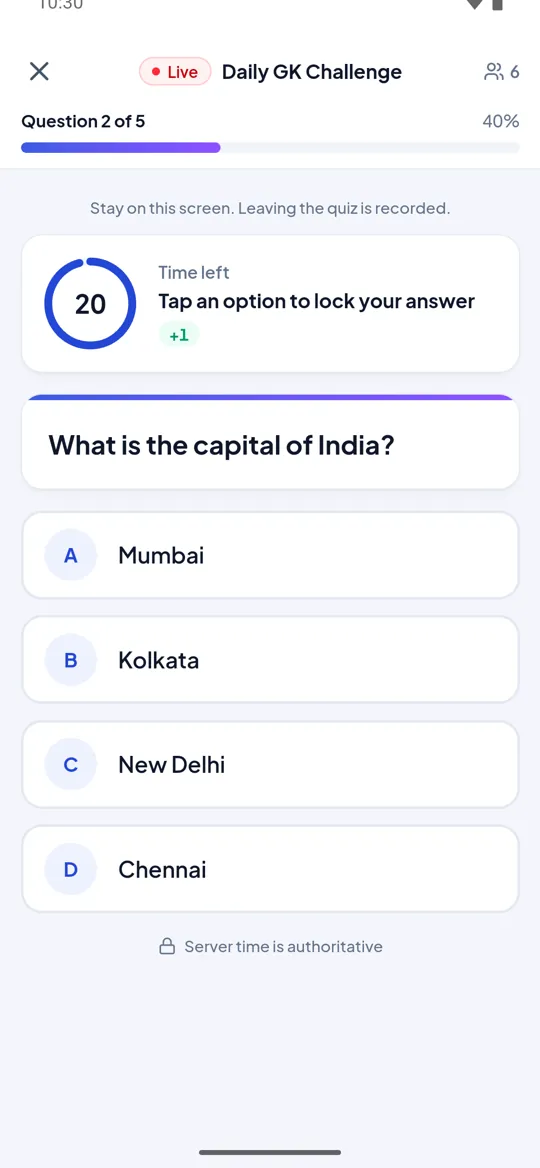
QuizMitra provides that round. Timetabled rounds begin at posted IST hours and the server controls each question’s window, so a hostel bed and a city flat share an identical clock. Reading is possible in English, Hindi or Marathi, language can change partway through a set, and mock papers or Mitra AI handle the trickier chapters.
Ghudda campus, AIIMS and the degree students who arrive each year
The Central University of Punjab, set on the Ghudda side of Bathinda, draws students from across the state and from neighbouring regions. Its departments cover the humanities, the sciences and management, and many undergraduates stay on after their degree to try for a government job or a postgraduate seat. Hostels, paying guest rooms and shared flats near the campus fill quickly at the start of each session, and the routine that follows is a mix of lectures, labs and library hours.
AIIMS Bathinda adds a different group of students: medical aspirants preparing for entrance tests, and graduates in nursing, pharmacy and allied courses who want a solid base before the next exam. Their timetables are long, and study time is often split between the wards, the lectures and a room shared with a friend. Short, timed rounds fit those gaps well, especially when the practice is in English, which many of these tests use.
A campus group that studies together can use the same tools. Students in one department can join the same round, compare results on one leaderboard and see which subjects the group finds hard. A practice mode that never touches rank means a tough round can be replayed before the next class, with no effect on anyone’s standing, and the group can talk through the questions that most people missed.
Cantonment mornings and the army and police aspirants of the Malwa belt
The military station near Bathinda is one reason young people in the district think about the armed forces early. Many aspirants train in the early morning, often on open ground near the cantonment, and return to study with a clear head. Defence recruitment rallies, the state police and the central forces all ask candidates to show a sound grasp of general science, current affairs and reasoning, and to stay calm while the clock runs. Many of them balance long runs with short, focused study periods in the afternoon.
Short daily rounds suit that rhythm. A short awareness drill after the run, an evening current-affairs round and a weekly mock paper create a dependable cycle that avoids long desk sessions. Because the server closes each question on a fixed timer, a candidate learns to move on quickly, which is the habit that police and defence written papers test.
It is a rehearsal tool, not a replacement for conditioning or the prescribed course. Track repeated errors in a notebook, study the review before the next round and rehearse shaky material in practice until the responses feel automatic. Mock test results show whether a candidate needs more work on reasoning, arithmetic or general awareness, and that tells the next week’s plan. Recruitment cycles can run for a long time, so a steady weekly pattern matters more than a few intense days.
Exams students in Bathinda prepare for
Mansa, Muktsar and Faridkot villages: phone-first study without a daily bus
Bathinda draws students from the villages of Mansa, Muktsar and Faridkot, and from the smaller market towns that lie between them. Some travel in each morning, but many families cannot spare the money or the time for a daily bus, so students stay home and study on a phone. Farm work during the harvest can take up whole days, and the study timetable has to bend around it. Parents often ask for a clear plan before they agree to a year of study at home, and a weekly timetable on paper helps.
A quiz app built for phones suits this kind of study. A family-room or rooftop round is possible through either the browser or the Android app, provided mobile data is available. Study notes display within the app itself, a useful feature for households sharing one device with little free space. Students who are new to the platform usually find the first round the hardest, and the next ones feel easier.
Results and analysis help a village student plan without a teacher nearby. An evening mock paper can be interrupted for chores and continued afterwards, since responses persist as they are entered. The section report then points to reasoning, awareness or language as the focus for the coming week, giving a concrete starting plan. The family can see the progress over several weeks and adjust the study hours as the harvest season requires.
What you get with QuizMitra in Bathinda
Practise from anywhere in Bathinda
Ghudda
The area on the edge of the city where the Central University of Punjab campus sits. Hostels and flats nearby are popular with students who want to be close to the library.
Bathinda Cantonment
The cantonment area, with the military station and open ground used for early morning running. Quieter streets make it a good place for practice before the day heats up.
Goniana Road
A road leading out towards Goniana, lined with rented rooms, photocopy shops and eateries that stay open late for students returning from evening classes.
Bathinda railway station
The main station links Bathinda with Delhi and other towns. A pause before departure suits a short round, and the review can be studied during the trip home.
Qila Mubarak area
The old fort area near the city’s heart, with tea stalls and small shops. Students often meet there for a quick revision session before the evening lectures.
AIIMS campus area
The medical campus draws a steady stream of students, staff and families, and the nearby lanes host hostels and tiffin services that suit long study days.
Friends, batchmates and the leaderboard in the evenings
Group study is common among Bathinda students, and it often starts informally. Friends meet after the evening meal, share a room or a rooftop, and argue over a question until somebody finds the right answer in the book. For aspirants preparing for state recruitment or entrance tests, a small circle of batchmates can keep the momentum going through the long months when the result seems distant. The best sessions have a clear start time, a short break and a shared review of the hardest question.
A live round turns that circle into a friendly contest. Participants enter together, face identical items and see the standings shift with each locked response. Accuracy ranks first, total answer time separates ties, and earliest entry settles anything left, meaning hasty guesses cannot outrank careful answers. Even a small group benefits from the same questions in the same order, because the comparison stays fair. Everyone in the group can see the same timings on the screen.
Keep the group honest. Commit to one shared round, go through the review together afterwards and discuss the items most of the group got wrong. Rehearsing a tough set in practice before the next mock keeps the competition cordial, since practice leaves every standing unchanged. A simple rule of one round a night keeps the habit alive without tiring anyone out. Each member can share one question they found tricky.
A study day in Bathinda, hour by hour
- Morning run on open groundA run or brisk walk on the open ground before the sun gets hot, with a few headlines from the day’s papers noted for current affairs.
- Campus lecture or hostel studyAttend the lecture or sit down for self-study with the day’s topics written on one page. Mark any question the teacher says could come up in an exam.
- Dal-roti lunch and a quick replayEat the home meal, then replay one practice round from the previous day. Check only the questions that were answered wrongly, and close the book after that.
- Numericals in the cool roomA set of numerical questions against a timer, followed by a check of each solution. Write down the step where each mistake began, and keep the page for the weekend.
- Live quiz with batchmatesJoin the evening live round with batchmates, answer each question on time and watch the leaderboard settle. Practice rounds can be replayed later without affecting anyone’s rank.
- One mock section and a sticky noteA timed section from a mock test, then the analysis page. Write the topic that cost the most time on a sticky note by the bed.
Try a Bathinda GK round
Five quick questions about Bathinda and Punjab. Tap an option to lock your answer, just like in a live quiz.
Bathinda lies in which region of Punjab?
Show answer
Answer: C. Malwa — Bathinda is in the Malwa region, the southern part of the state known for its cotton and wheat fields. Majha centres on Amritsar, and Doaba lies between the Beas and the Sutlej.
The name Punjab is usually explained as the land of which element?
Show answer
Answer: A. Five waters — Punjab is commonly translated as the land of five waters, a reference to the rivers that irrigate it. The Sutlej, Beas, Ravi, Chenab and Jhelum are the rivers traditionally named.
Which central university is based at Ghudda near Bathinda?
Show answer
Answer: C. Central University of Punjab — The Central University of Punjab has its campus at Ghudda near Bathinda. Panjab University is in Chandigarh, Guru Nanak Dev University is in Amritsar and Punjabi University is in Patiala.
Which national medical institute has a campus in Bathinda?
Show answer
Answer: B. AIIMS — AIIMS Bathinda is one of the All India Institute of Medical Sciences campuses set up under a central government scheme. IITs, NITs and IISERs are not medical institutes.
Chandigarh serves as the capital of which two states?
Show answer
Answer: D. Punjab and Haryana — Chandigarh is a union territory that serves as the shared capital of Punjab and Haryana. Its planned layout by the architect Le Corbusier is famous around the world.
Cotton season, winter fog and summer heat across the Malwa plain
Bathinda’s year follows the crops. During the cotton season the fields are busy and families need help picking and carrying, so students plan their reading around the harvest. Winter brings fog and cold mornings across the Malwa plain, and the afternoons are the warmest part of the day for reading. Summers are hot and dry, and the afternoon heat makes long sessions tiring for anyone without a cooler room. Students in farming families often study in short blocks between field tasks, and that rhythm is worth respecting. Many families plan the year around the harvest and keep a calendar on the kitchen wall.
Live quizzes suit the changing rhythm. A short round in the afternoon keeps recall sharp during a hot spell, and a longer evening session makes sense in winter when the days are short. Server-side timing applies to everyone equally, although arriving early and holding a stable connection prevents a mid-round disconnection. A quick replay after the harvest weeks brings back the topics that slipped.
Plan the year around these seasons. Look over the website’s competition timetable each Monday, schedule one fixed mock paper monthly and ease off during harvest weeks. A steady pattern that bends with the seasons tends to last longer than a plan that ignores them. A calendar on the wall helps the whole household keep track of which weeks are heavy.
How to pick the best quiz app in Bathinda
- Versions in Hindi, English and Marathi share one key, which keeps scoring equal between an English reader and a Hindi reader.
- Server authority over timing means a crowded hostel network cannot stretch or shorten a round. Nobody gets extra minutes because of a poor line.
- Right after each round, the review reveals correct options while the questions are still in memory. This helps the lesson stick.
- Mock tests with mark-for-review and a question palette, which help a candidate learn the layout before a written test.
- A browser version that works on an everyday Android phone, plus notes that open inside the app without a download.
- A practice mode that never touches rank, so a tough round can be replayed before the next mock without any effect on standing.
Questions students in Bathinda ask
Where is the best quiz app near me in Bathinda, and what is the fairest way to compare?
For a Bathinda student the checks that count are honest start times, a timer the handset cannot manipulate, languages that match the exam, analysed mock tests and compatibility with the phone you carry. QuizMitra provides rounds run on the server clock, three languages, rank-neutral practice and mock papers with section insights. Try a round and see whether it fits.
Does QuizMitra work across Bathinda district?
Yes. Access rests on mobile data or Wi-Fi, which makes the city, Mansa, Muktsar, Faridkot and the rural stretches between them equally reachable. Browser access is available, and the Android build sits on the quizmitra.in download page. A dependable signal helps most, and a brief interruption is handled when the room reconnects.
Can I study in Punjabi?
Punjabi is not one of the three languages offered here. Notes, rounds and mock papers come in English, Hindi and Marathi with the same running order across languages. Many students who think in Punjabi use Hindi, which shares much of the everyday vocabulary, and switch to English for technical terms.
Do I need to pay anything to start?
New profiles open with a free trial attached to a single phone number, and nothing needs to be entered as payment. The trial gives you a chance to join live rounds, try a mock test and read the notes. Paid plans are offered afterwards for students who want continued access, and you decide whether to subscribe.
Can I use it on a basic phone without a laptop?
Yes. Ordinary handsets with current browsers can load the website, and the Android app also appears on the download page. A laptop is not needed. Keep the phone charged for a live round, stay on a steady connection and avoid other heavy apps while the timer runs.
Which exams can I prepare for with QuizMitra in Bathinda?
No university or commission paper comes from QuizMitra; the platform supplements the official syllabus and your class notes as a practice companion. Live rounds build recall across general knowledge, current affairs and reasoning, which state recruitment and entrance papers test. Full-length mock papers come with a section-wise breakdown.
I am a student at a Bathinda college. Can I join live rounds between lectures?
Yes. Set IST times let you choose a slot that sits between lectures. Join a few minutes early, keep the phone on a steady connection and avoid switching apps once the timer is running. The competitions page shows each round’s subject, so you know what to expect.
Can a parent or teacher check progress on a student’s rounds?
After a test, a student can share the score, rank and section-wise analysis with a parent or teacher. Upcoming rounds are listed with their subject and time on the competitions page, so families can plan around them. Fixing one practice hour each day tends to beat checking the screen whenever it buzzes.
Whether you are reading near Ghudda, on the cantonment side of town or at home in a village near Mansa, the next step is small. Register at no cost, pick a round for this week and arrive when it begins. Students here have long pushed through demanding seasons, and regular rounds each week will show how far your preparation has advanced.